
EODD vs AODD Pumps: Which Diaphragm Pump Is Right for Your Application?
Choosing between an Air Operated Double Diaphragm (AODD) pump and an Electric Operated Double Diaphragm (EODD) pump can significantly impact your process efficiency, operating costs, and overall system performance. In this guide, we compare the key differences between both technologies, explore their ideal industrial applications, and explain when each solution is the best choice. Whether you're transferring corrosive chemicals, handling viscous fluids, operating in hazardous environments, or looking to reduce energy consumption, this blog will help you select the right diaphragm pump for your application.
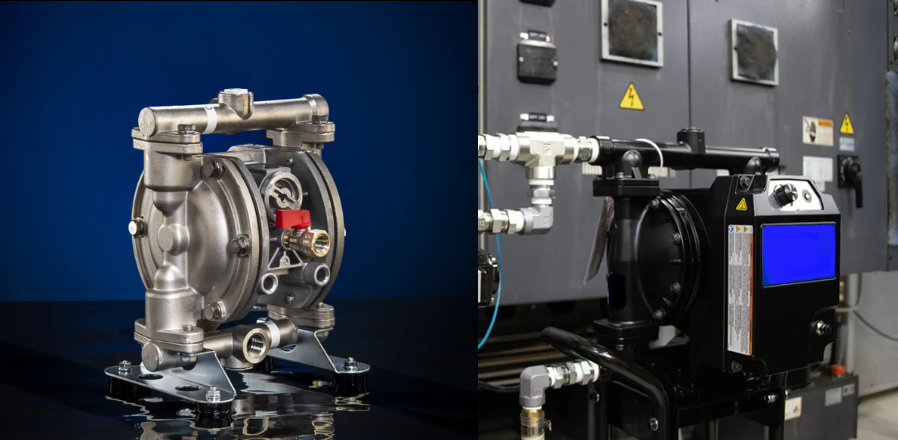
Diaphragm pumps have become an essential solution for industries requiring reliable, leak-free, and low-maintenance fluid transfer. Among the most popular technologies are Air Operated Double Diaphragm (AODD) pumps and Electric Operated Double Diaphragm (EODD) pumps. While both share the same positive displacement pumping principle and can handle a wide range of challenging fluids, their method of operation makes each better suited to different applications.
Understanding where each technology excels can help improve efficiency, reduce operating costs, and maximise process reliability.
Understanding the Difference
An AODD pump is powered by compressed air, using an air valve to alternately pressurise two diaphragms that move fluid through the pump.
An EODD pump uses an electric motor combined with a mechanical drive system to reciprocate the diaphragms, eliminating the need for compressed air while maintaining the advantages of diaphragm pump technology.
Although their pumping mechanism is similar, their performance characteristics differ significantly.
When to Choose an AODD Pump
AODD pumps are the preferred choice when flexibility, safety, and portability are the highest priorities.
1. Hazardous and Explosive Areas
Since AODD pumps require no electrical components at the pump itself, they are ideal for:
Chemical processing
Solvent transfer
Paint manufacturing
Fuel handling
Petrochemical plants
ATEX classified zones
Their air-powered design significantly reduces ignition risks in hazardous environments.
2. Intermittent Pumping Operations
Where pumps only operate occasionally, compressed air systems already exist, making AODD pumps extremely economical.
Typical applications include:
Drum emptying
IBC transfer
Batch processing
Chemical dosing
Maintenance operations
3. Portable Pumping
Without electrical wiring, AODD pumps can easily be moved between tanks, production lines, or temporary installations.
Ideal for:
Construction sites
Mining
Mobile service vehicles
Emergency spill response
4. Dry Running Applications
AODD pumps can safely run dry without damaging internal components.
Suitable for:
Tank unloading
Sump pumping
Wastewater pits
Product recovery
5. High Solids and Abrasive Fluids
Their low-speed pumping action allows them to transfer:
Sludge
Slurries
Ceramic mixtures
Mining tailings
Waste oils
Viscous adhesives
Large suspended solids can pass without damage.
6. Variable Flow Requirements
Pump speed can be adjusted simply by regulating air pressure or airflow.
This makes AODD pumps ideal where operators frequently need to change flow rates without sophisticated controls.
Typical AODD Industries
Chemical processing
Oil & gas
Mining
Marine
Wastewater treatment
Paints & coatings
Printing inks
Ceramics
Food & beverage
Pharmaceuticals
When to Choose an EODD Pump
EODD pumps combine diaphragm pump versatility with significantly improved energy efficiency and process control.
1. Continuous Duty Applications
Electric motors consume considerably less energy than compressed air systems, making EODD pumps ideal for continuous production.
Applications include:
Production transfer
Process circulation
Chemical feed
Continuous manufacturing
2. Energy-Efficient Operations
Compressed air is one of the most expensive forms of industrial energy.
An EODD pump can reduce operating costs by:
Eliminating compressed air consumption
Lowering compressor load
Reducing maintenance on air systems
Improving overall plant efficiency
Plants operating pumps for several hours each day often achieve significant energy savings after switching from AODD technology.
3. Precise Flow Control
Variable Frequency Drives (VFDs) allow EODD pumps to deliver:
Accurate flow rates
Repeatable dosing
Stable discharge pressure
Automated process control
Ideal for automated production systems.
4. Quiet Operation
Without exhausting compressed air, EODD pumps operate much more quietly.
Suitable for:
Indoor production
Food processing
Pharmaceutical plants
Laboratories
5. Reduced Air Consumption
Facilities with limited compressor capacity often benefit from replacing continuously operating AODD pumps with EODD units, freeing compressed air for pneumatic equipment.
6. Food and Hygienic Applications
EODD pumps are widely used where:
Stable product flow is required
Gentle product handling is important
Low pulsation improves filling accuracy
Applications include:
Dairy
Beverage production
Syrups
Sauces
Cosmetics
Typical EODD Industries
Food & beverage
Pharmaceuticals
Cosmetics
Water treatment
Chemical processing
General manufacturing
Automotive production
Electronics manufacturing
Applications Where Either Pump Works Well
Many industries successfully use both technologies depending on operational priorities.
These include:
Chemical transfer
Acids and alkalis
Corrosive fluids
High-viscosity liquids
Resins
Adhesives
Wastewater
Sludge
Detergents
Food products
Cosmetics
Cleaning chemicals
The deciding factor is usually how the pump will be operated rather than the fluid itself.
How to Decide
Choose an AODD pump when your application requires:
Hazardous area operation
Maximum portability
Frequent dry running
Intermittent use
Simple installation
Existing compressed air infrastructure
Choose an EODD pump when you need:
Continuous operation
Lower operating costs
Higher energy efficiency
Precise flow control
Process automation
Quieter operation
The Best Solution Depends on Your Process
Neither technology is universally better—the ideal choice depends on your operating environment, energy costs, process requirements, and production goals. For intermittent duties, hazardous locations, or mobile applications, AODD pumps remain the industry standard due to their simplicity and robustness. However, for continuous production, automated systems, and facilities focused on reducing energy consumption, EODD pumps provide a more efficient and cost-effective solution.
At Services Syndicate Ltd, we offer both Air Operated Double Diaphragm (AODD) and Electric Operated Double Diaphragm (EODD) pumps, helping customers select the right technology for demanding industrial, chemical, hygienic, and process applications. Our engineering team can assess your operating conditions and recommend a pumping solution that delivers the optimum balance of performance, reliability, and lifecycle cost.